Singer/songwriter Bill Withers is not very well known but he had a very successful career thanks to three huge hits, “Lean On Me”, “Use Me” and, of course, “Ain’t No Sunshine.” Two musicians from Booker T. and the MGs, my favourite band as a teenager, played on his recording of “Ain’t No Sunshine”; bassist Donald “Duck” Dunn and drummer Al Jackson, with Booker T. himself producing. It was Booker T. Jones’ superb B3 organ playing which inspired me to initiate this B3 project. Also, playing keyboards somehow brings me closer to my brother Gabriel, who died so many years ago but is always a part of my life.
The traditional gospel song “Sign of the Judgment” has been recorded by several gospel choirs and singers, like the excellent McIntosh County Shouters.
“John the Revelator”, another traditional gospel song, has also been recorded by a number of artists, most notably by Son House. His 1965 a cappella recording of “John the Revelator” is one of the great musical masterpieces of the 20th century. If you’ve never heard it, you must, by using this link: http://www.youtube.com/watch?v=P7m-Kenqhpk
Today is the birthday of Alphonse Villeneuve (dit Amyot), the man who became our third grandfather. He married my maternal grandmother a few years after my grandfather Comtois died in 1915. My family always referred to him as Pepère Villeneuve. This is the only picture of him, with my grandmother, probably taken at their wedding. They both lived with my family until their death, my grandmother in 1947 and Pepère Villeneuve in 1960. I was 10 and he was 95.
Pepère Villeuve was the most influential person in my life, after my father. He was everything I was not and everything I wanted to be. He was blessed with remarkable health, strength, piety and character, the likes of which are beyond the reach of men of this day. In 1978, I wrote a piece in his honour, simply called “Pepère Villeneuve”, but I was only able to record it in 2004 on my CD “From Stone.” Here is the piece. Thank you, Pepère.
It’s impossible to believe that any artist today can change the course of contemporary music. The music industry simply controls the consumption of music, just like any other profitable commodity. But things were not always this way.
The course of contemporary music was certainly changed by The Beatles and Dylan, but Miles Davis did it twice! “Bitches Brew” (1970) redefined modern jazz and “Kind of Blue” (1959), from which this piece is taken, is generally recognized as Davis’ masterpiece and the greatest jazz album of all time. Although Davis is listed as the writer of all the compositions on the album, “Flamenco Sketches” (and “Blue in Green” for that matter) undoubtedly comes from the genius that was Bill Evans, Miles’ pianist at the time.
As with my previous recordings using the B3 Trio format (guitar, B3 organ, drums), this rendition of “Flamenco Sketches” shows my R&B roots. I even channel Deep Purple around the 4 minute mark! In the cascade of harmonics at the end of the piece, the more attentive ear will make out my little nod to “My Funny Valentine”, a Davis favourite throughout his career. Happy Valentine’s Day everyone (one day late).
The sun low on the horizon, the light diffused by the clouds, the harvested fields, November is for me a singular and strange time of year. Only music can express this feeling, which I tried to do with this new composition, “November Sun.” I took this photo not far from here on Ramage Road. Thanks to Pépé (Pierre Pinard) for lending me his superb 12-string electric guitar, a Taylor T5.
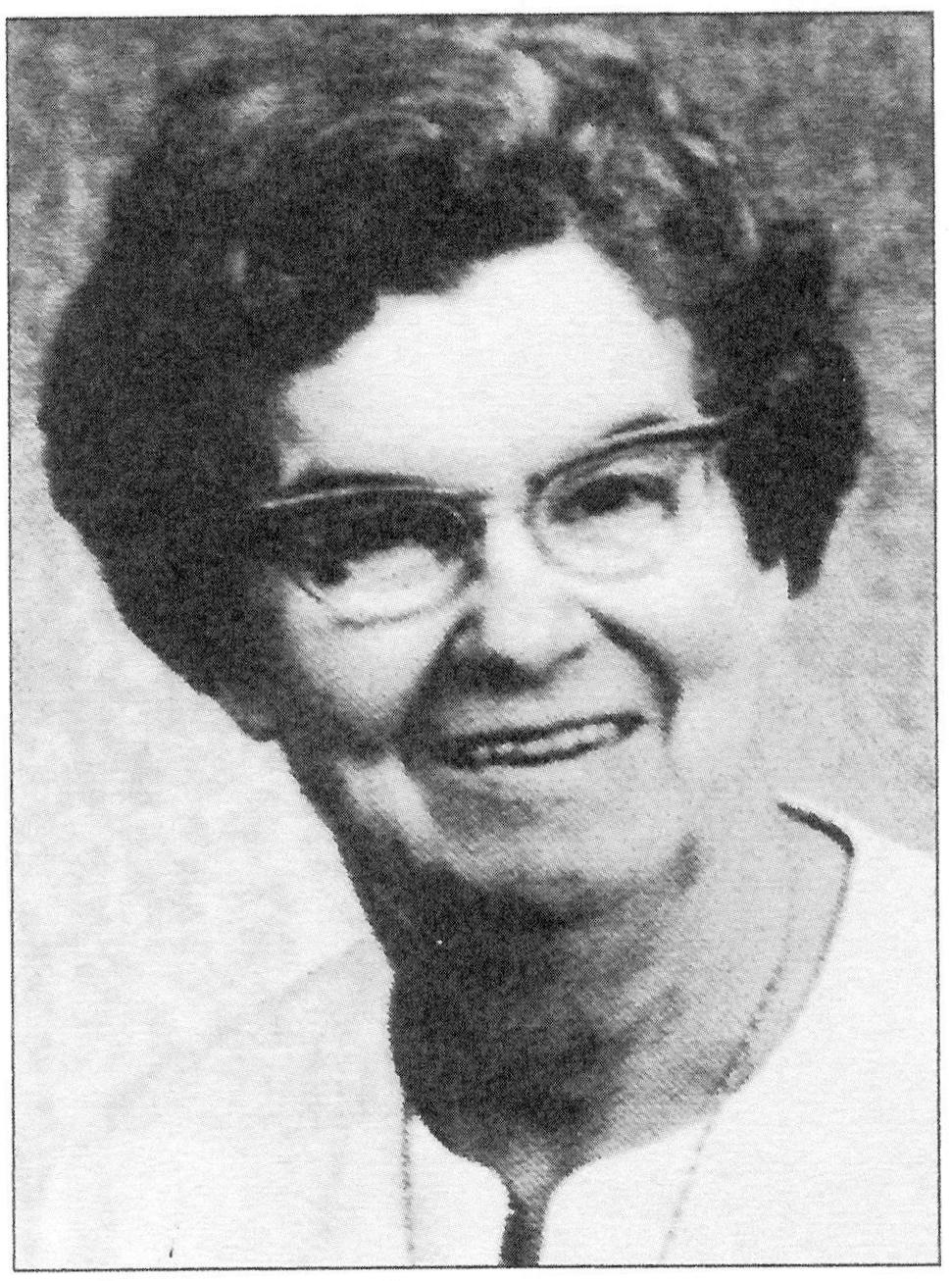
Few people of eastern Ontario have not known nor heard of Dr. Annie Powers (1907-1989). Daughter of Dr. Martin Powers whose two brothers were also doctors, she was a teacher, school cousellor and especially a doctor for 40 years. Established in her home town of Rockland, she not only saw to people’s health but also to their well- being. She would visit patients from all neighbouring villages, even by sleigh during winter. At a time where there was no universal health insurance plan, her services were often free to patients in need and she was also known to provide food, clothing and heating oil to those less fortunate. All these gestures of benevolence were accomplished in the utmost silence and humility. Dr. Powers received numerous accolades in her life and, in 1980, was named to the Order of Canada. She is buried here in Rockland.
On a more personal note, I visited Dr Powers’ office when required when I was young and Annie came regularly to our home to care for my mother.
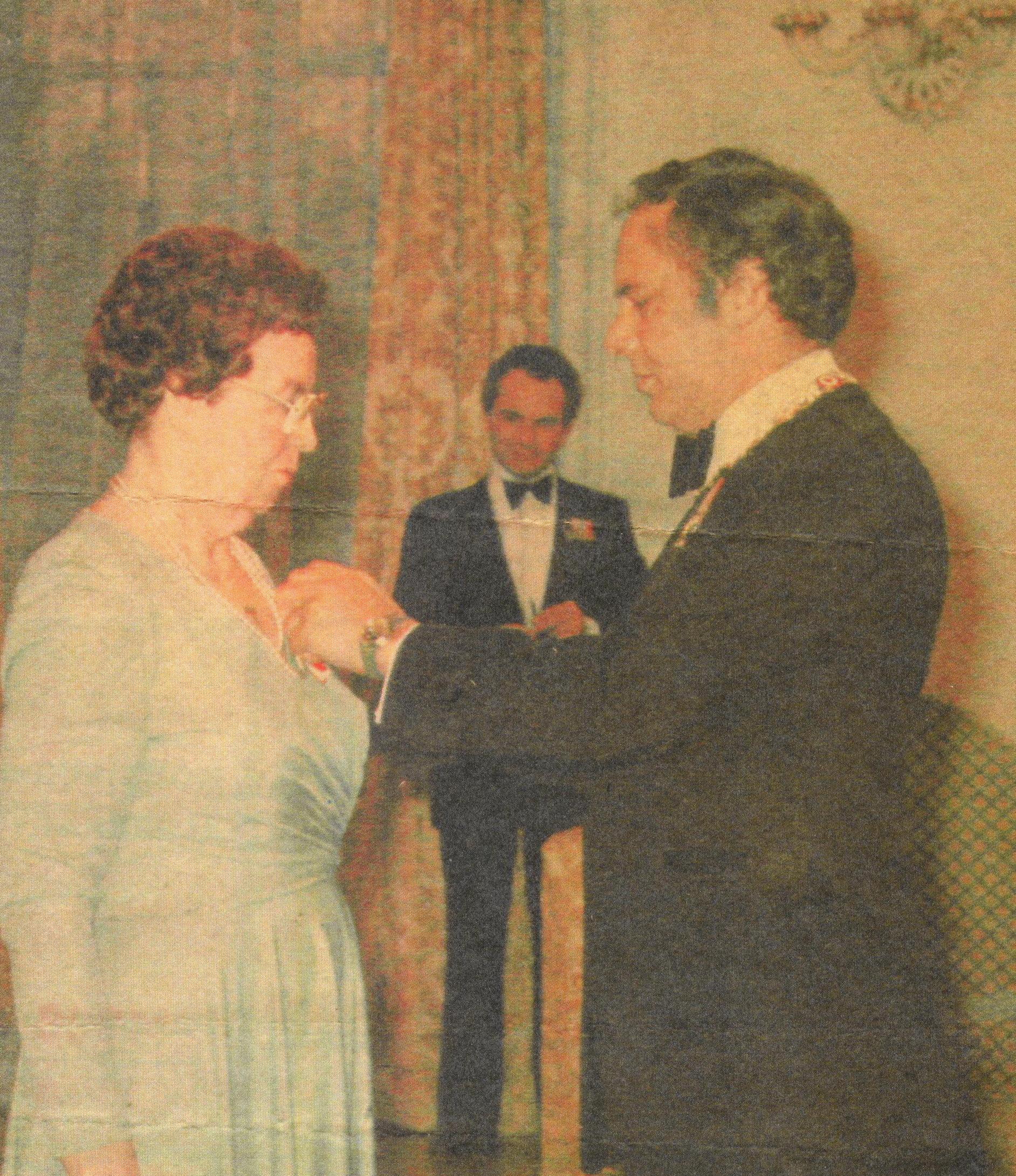
Dr. Powers receiving the Order of Canada from Governor General Ed Screyer
I remember one particular incident from my youth. We were fishing at the Rockland quay at the end of Edwards Street and I casted with all my might and imbedded my hook firmly into the knee of my brother Robert standing behind me! With the help of our cousin Jacques Hamon to support my brother, we made it all the way up the hill on Edwards Street and barged right into Dr. Powers’ office. Pierrette, her receptionist, ushered my brother in to see Annie and he emerged shortly after, good as new. It goes without saying that my parents never received a bill for these services. Thanks to Gilles Chartrand and the Museum of Clarence-Rockland for all the documentation. Here is this celtic waltz for the first lady of eastern Ontario, Annie Powers.
When I was young I would often hear the lonesome and distant sound of a train passing on the far side of the river at night. I’ve loved trains ever since and especially the hundreds of songs about trains. My first train song was “Little Train Goes Far” from my album “Spring Water”, which you can listen to further below. Here is my second train song.
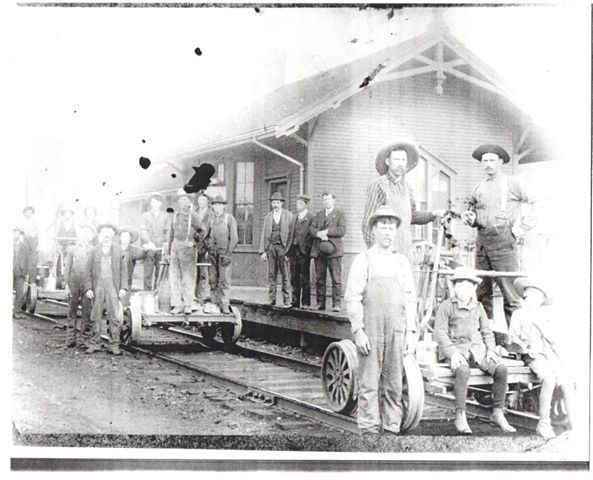
At the turn of the 20th century, the lines of the Grand Trunk Railway serviced eastern Ontario between Ottawa and Montreal. South Indian was one of their stations and it is now the village of Limoges. There was also a station called North Indian, which became the village of Hammond, not far from Rockland.
Thanks to Gilles Chartrand and the Museum of Clarence-Rockland for the superb photo and the inspiration. Here’s “South Indian, 1907.”
This project has been circling in my head for years. For a long time, I’ve admired several guitarists who choose to record in a “B3 trio” format, i.e. electric guitar, Hammond B3 organ and drums. A piece played by only three instruments obviously represents a challenge but also provides the possibility of attaining a minimalist beauty. A recording like John McLaughlin’s “After The Rain” is a prime example of the heights which a B3 trio can attain. I’ve often wondered what I could do with this format so here are a few examples.
First, the technical stuff – I recorded the guitar parts on my Fender Stratocaster going through Native Instruments’ Guitar Rig 5; the drums were generated by Steinberg’s Groove Agent 3 program, with several of my manual corrections to the MIDI files; I achieved the organ sound by playing my Z6S MIDI guitar through Native Instruments’ Vintage Organs software. I did the recording and mixing on my digital audio workstation, Steinberg’s Cubase Studio 5.
In choosing the B3 trio format to record, I also wanted to showcase pieces from my favourite composers, something new since I’ve never recorded any compositions other than my own. Also, my favourite composers tend to work in the jazz field while my guitar roots are in Chicago Blues and 60’s Rhythm & Blues. As a teenager, I particularly loved instrumental groups like The Shadows (Apache, The Rise and Fall of Flingle Bunt) and The Ventures (Telstar, Walk Don’t Run). Consequently, my interpretations of these pieces have a strong R&B flavour.
There are four recordings in this first instalment, which total more than 25 minutes of music. I’ll follow up with more recordings in this B3 trio format as time will allow. Here are the pieces:
This music is protected and any commercial use is strictly forbidden.
On Stream
Composed by Nils Petter Molvær
Published by ECM Records
The Norwegian trumpet player Nils Petter Molvær plays music that combines several genres to create a sound that is entirely his own. I had the priviledge of seeing him live and his group projects a wall of sound, sometimes overwhelming, sometimes transparent, continuously morphing throughout the entire concert, giving form to his pieces like air gives form to clouds. Like all my favourite composers, he’s a leader, not a follower. “On Stream” comes from his 1997 recording entitled “Kmer.” Click on the arrow below to hear the piece.
The American guitarist Bill Frisell has been creating music for more than 30 years. He’s at home with several styles and his compositions showcase a particular intimacy with tonalities and their correlation. Frisell has recorded « Strange Meeting » many times but never the same way twice! Click on the arrow below to hear the piece.
Compare with one of several original recordings of this piece:
Deep as Love
Composed by Tord Gustavsen
Published by ECM Records
A piece taken from Gustavsen’s first ECM recording in 2003. This young Norwegian pianist’s compositions show a surprising maturity. His recording of « Deep as Love » is in the best tradition of those passionate compositions put out by several of the classic American jazz trios (piano, doublebass, drums); my recording is all blues and R&B. Click on the arrow below to hear the piece.
Deep as Love
[audio:http://eng.richardaseguin.com/wp-content/uploads/2013/05/Deep-as-Love.mp3|titles=Deep as Love]
Compare with the original recording:
http://www.youtube.com/watch?v=bf-n9qTsjiA
The Lonesome Death of Hattie Carroll
Composed by Bob Dylan
Published by Sony Music Entertainment
Everyone knows Dylan. He wrote « The Lonesome Death of Hattie Carroll » in 1964, following a 1963 incident where William Zantzinger, one of Baltimore’s young elite, killed Hattie Carroll, a 51 year-old waitress and mother of 11. Found guilty of murder, three judges fined him $500 and gave him a 6-month prison sentence, which was delayed by three months so he could bring in his tobacco crop. It was with compositions like this that Dylan became a leading figure in the 60s cultural revolution. Click on the arrow below to hear the piece.
The Lonesome Death of Hattie Carroll
[audio:http://eng.richardaseguin.com/wp-content/uploads/2013/05/The-Lonesome-Death-of-Hattie-Caroll.mp3|titles=The Lonesome Death of Hattie Caroll]
“Spring Water”, my third album, is now available on YouTube in a series of videos. Recorded in 1978, “Spring Water” represents a highly productive period in my young career as a musician. At the time, it was also a big financial risk, which eventually came back to bite us! We weren’t able to sustain the production and promotion of a third album, especially a double album recorded entirely in the studio – in those analog days, recording 25 pieces in the studio was expensive! But, we have the music and it’s there forever. That the music is also freely available to everyone is even more satisfying since that was our goal all along.
I have to thank the musicians who helped me with this music: Marc Beneteau, Roch Tassé and Fred Priebe. Also, a big thanks to my brother Bob who followed us with his camera – otherwise,we wouldn’t have pictures of this era and the videos would be that much the poorer. And finally, of course, a special thanks to Jean-Pierre Béland of Pentafolio, for being there, always.
Here are the videos, in the order that the pieces are on the two albums.
My second album, “Rumours in the Barnyard”, recorded in 1976, is now available as videos on YouTube. The audio of the pieces is digitally remastered from the original vinyl. Here are the videos, in the order of the pieces on the album.